
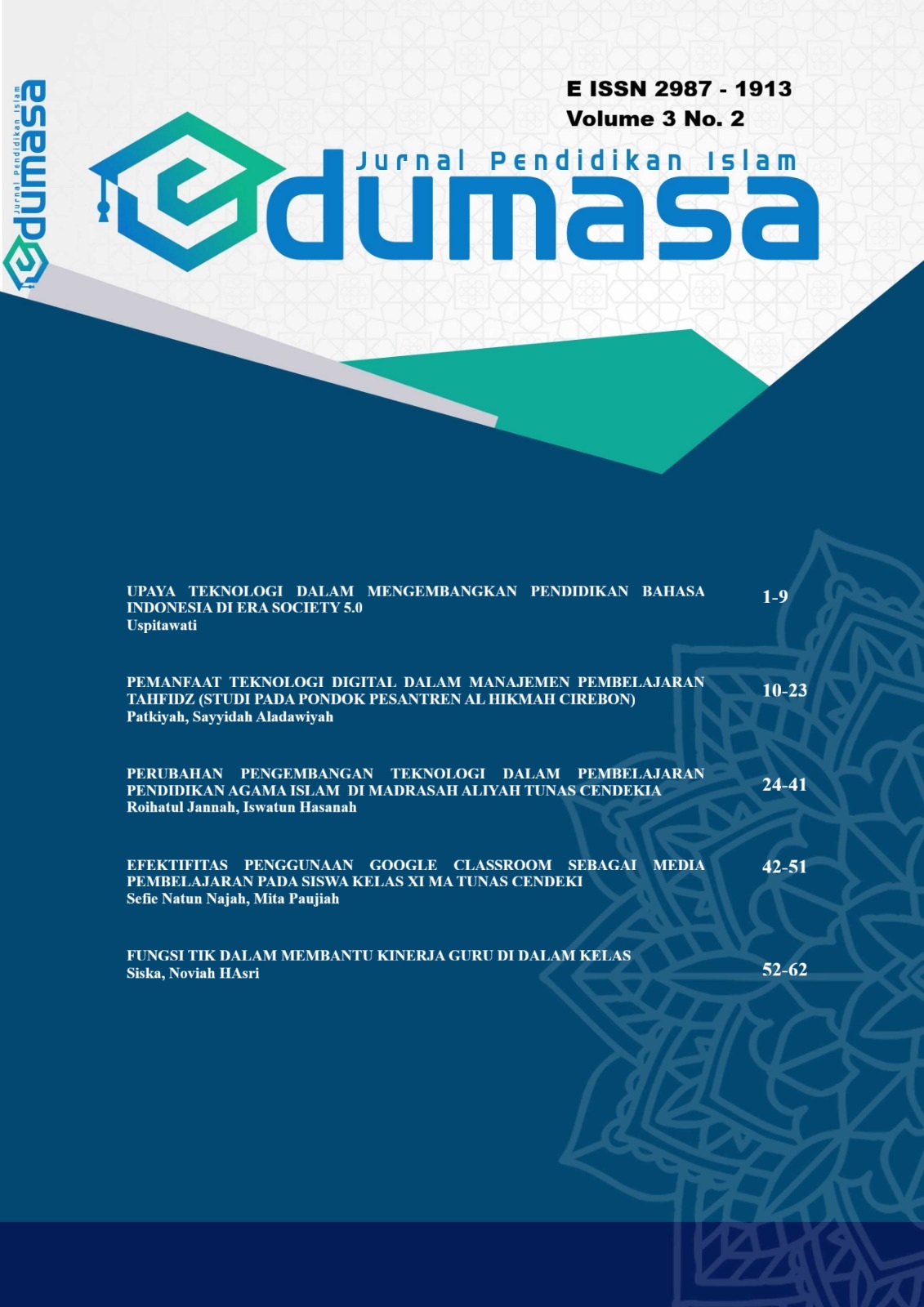
PEMANFAAT TEKNOLOGI DIGITAL DALAM MANAJEMEN PEMBELAJARAN TAHFIDZ (STUDI PADA PONDOK PESANTREN AL HIKMAH CIREBON)
Article Sidebar
tahfidz,
alquran
Main Article Content
Abstract
The rapid development of digital technology has brought significant changes to various aspects of education, including tahfidz learning in Islamic boarding schools. At Al Hikmah Islamic Boarding School in Cirebon, the integration of digital tools into the management of tahfidz learning has become an essential strategy to improve both efficiency and effectiveness in memorizing the Qur’an. Digital applications, such as mobile-based Qur’an memorization platforms, audio recording tools, and online supervision systems, provide teachers and students with easier access to resources, real-time monitoring, and personalized learning pathways. These technologies also support students in repeating their memorization independently, enabling them to strengthen and maintain the quality of their hifz. In addition, digital technology contributes to more structured data management for teachers, allowing them to track students’ progress, evaluate common mistakes, and design targeted interventions. Despite these advantages, the implementation of digital tools still requires adequate digital literacy, strong institutional support, and careful adaptation to maintain the spiritual and traditional values that characterize tahfidz learning. This study aims to explore how digital technology is utilized, its impact on learning outcomes, and the challenges faced by Al Hikmah Islamic Boarding School in integrating technology within its tahfidz management system
Article Details

This work is licensed under a Creative Commons Attribution-ShareAlike 4.0 International License.
References
Aastiqomah, Aastiqomah, & Lismawati, L. (2023). Penggunaan Media Pembelajaran Berbasis Teknologi Dalam Upaya Meningkatkan Kualitas Pendidikan Agama Islam. Journal of Islamic Education and Innovation.
Abdurrahman, A. (2012). Quantum Learning. Mizan Pustaka.
Allen, L. (n.d.). Karya Manajemen. PT Pembangunan.
Creswell, J. W. (2012). Educational Research: Planning, Conducting, and Evaluating Quantitative and Qualitative Research. Pearson Education.
Davis, G. B. (1999). Kerangka Dasar Sistem Informasi Manajemen Bagian I: Pengantar Teori dari Manajemen Information Sistem: Conceptual Foundation, Structure, and Development. Lembaga Manajemen PPM dan PT Pustaka Biniman Pressindo.
Fatmawati, E. (2019). Manajemen Tahfidz Al Qur’an. Jurnal Isema, 4(1), 25–38.
Freina, L., & Ott, M. (2015). A Literature Review on Immersive Virtual Reality in Education: State of the Art and Perspectives. ELearning & Software for Education, 1, 133–141.
Hidayat, Y., Yudiyanto, M., Mukhlisin, Malik Sofy, A. R., Nurishlah, L., Hadi, D. S., Mulyani, A. S., Wahidah, E., Firdaus, M. R., Dini, A., & others. (2024). STUDENT CENTER: memahami peserta didik dari berbagai aspek. CV. Intake Pustaka.
Maulana, R., Durnik, M., & De?man, M. (2024). Collaborative Approach on Digital Government Transformation: In-Depth Analysis from Expert Interview. NISPAcee Journal of Public Administration and Policy, 17(1), 94–119. https://doi.org/10.2478/nispa-2024-0005
Mukhlisin, M., & Sofy, M. (2025). KULTUR PESANTREN; Santri, Etos Studi dan Perilaku Keagamaan. CV. Intake Pustaka.
Mukhlisin, M., Sofy, M., Purbaya, D., & Rifai, A. (2024). Implementation of Social Educational Values in the Pillars of Islam at Pondok Pesantren Miftahussa’adah Sindangbarang. TA’DIB: Jurnal Pendidikan Agama Islam, 2(2), 139–153.
Mukhlisin, M., Yuniawati, R. I., & Atsa’lawi, A. (2023). The Implementation of Prophet’s Character Education at Al-Multazam II. EduMasa: Journal of Islamic Education, 1(1), 13–23.
Mure?an, M., & Gogu, E. (2014). Overcoming the digital divide for facilitating the e-learning process. ELearning and Software for Education. https://doi.org/10.12753/2066-026x-14-188
Ni’amah, K., & M, H. S. (2021). Teori Pembelajaran Kognivistik dan Aplikasinya dalam Pendidikan Islam. Jurnal Ilmiah Mahasiswa Raushan Fikr, 10(2), 204–217. https://doi.org/10.24090/jimrf.v10i2.4947
Nizam Team. (2022). E-learning for Religious Studies Manual. Nizam Publisher.
Nizar, S. (2013). Sejarah Sosial dan Dinamika Intelektual Pendidikan Islam di Nusantara. Kencana Prenada Media Group.
Noor Islahudin, A., & Ramadhani Wulandari, N. (2022). Manajemen Pembiayaan Pendidikan Perspektif Al-Quran. Mindset: Jurnal Manajemen Pendidikan Islam, 1, 1–21. https://doi.org/10.58561/mindset.v1i1.24
Nuryeti, & Aryani, R. (2021). Pengaruh Sistem Punishment terhadap Kedisiplinan Anak Usia 5-7 Tahun. PAUD Lectura: Jurnal Pendidikan Anak Usia Dini, 5(01), 59–72. https://doi.org/10.31849/paud-lectura.v5i02.7181
Rio. (2025). Literasi Digital: Pengertian, Contoh, Manfaat, dan Tujuan. https://vestoli.com/literasi-digital-pengertian-contoh-manfaat-dan-tujuan/#gsc.tab=0
Safaria, T. (2007). Spiritual Intellegence: Metode Pengembangan Kecerdasan Spiritual. Graha Ilmu.
Shihab, M. Q. (2007). Wawasan Al-Qur’an. Mizan.
Uyoh, S. (2014). Pedagogik: Ilmu Mendidik. Alfabeta.
Wahid, M. (1999). Pesantren Masa Depan. Pustaka Hidayah.
Yaqin, F. A., Sumbullah, U., & Rofiq, A. (2021). Manajemen Pembiayaan Pendidikan Ditinjau Tafsir Dan Hadits Tematik. Evaluasi: Jurnal Manajemen Pendidikan Islam, 5(2), 274–292. https://doi.org/10.32478/evaluasi.v5i2.741
Zuhairini. (2009). Filsafat Pendidikan Islam. Bina Aksara.